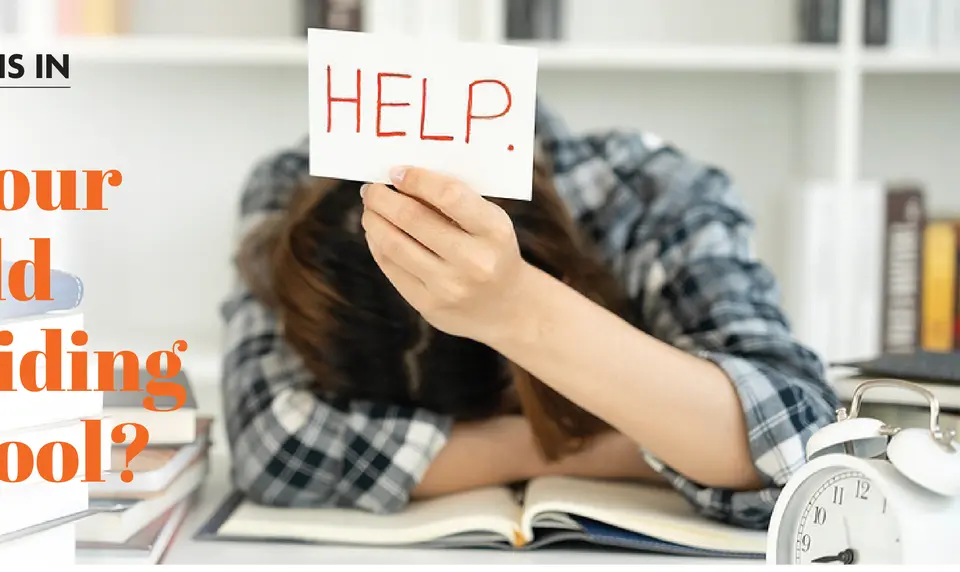
A child psychiatrist explains why school avoidance tied to anxiety is more common than ever — and what parents can do when their child refuses to get out of bed.
On a Monday morning, your child clutches their stomach and insists they can't go to school. By Tuesday, they're in tears. By Wednesday, they refuse to get out of bed altogether. Is it a phase? A power struggle? Or something else?
For many children and teens, school avoidance (also called school refusal) is directly related to anxiety.
As a board-certified child and adolescent psychiatrist at Kaiser Permanente, I am seeing this more often than ever. Since the COVID-19 pandemic disrupted routines, learning environments and social development, many kids have struggled to readjust to in-person school. The result is a pattern of increasing distress and anxiety around school for many kids.
What is school avoidance?
School avoidance is when a child experiences intense emotional distress related to attending school, leading them to miss days or resist going altogether.
This isn't the occasional "I don't feel like going" moment that many kids have before a big test or after an argument with friends. All children have those. Instead, school avoidance tends to look like:
- Ongoing difficulty getting to school
- Frequent absences or partial days
- Calling or texting parents from school asking to be picked up early
- Panic, tears or physical symptoms tied specifically to school
- A pattern that worsens over time
Why is this happening more now?
Several factors may be at play to explain why we are seeing more kids experiencing school avoidance.
Post-pandemic social challenges: Many children spent formative years learning from home, with limited peer interaction. Returning to crowded classrooms, especially in middle and high school, can feel overwhelming. Social anxiety is one of the most common drivers of school avoidance today. Children may worry that classmates are judging them, that they don't fit in or that they may say something wrong. Bullying is also a real concern. Kids who are victims of bullying may develop intense anxiety about going to school.
Academic pressure and learning gaps: Some students fell behind academically during remote or hybrid learning. Others are dealing with undiagnosed learning differences, attention deficit hyperactivity disorder (ADHD) or executive functioning challenges. When school starts to feel like a place where they "fail," avoidance becomes a coping mechanism.
Technology and attention shifts: Many parents report that their children prefer staying home on their phones. Excessive screen use can reduce attention span, increase need for constant stimulation and make classroom learning feel intolerably slow or boring. When children say school feels "too hard" or "too boring," and they don't want to go, their brains may simply be struggling to adapt.
Underlying mental health conditions: School avoidance can be a symptom of anxiety disorders (including social anxiety disorder), depression or ADHD. Sometimes school refusal is the first sign that something deeper needs attention.
How anxiety shows up at different ages
One of the biggest challenges for parents is recognizing anxiety.
Elementary school children
- Younger kids often express anxiety through the body, not words. This is called somatization: emotional distress appearing as physical symptoms. Look for:
- Stomachaches, headaches, nausea, particularly on school-day mornings
- Frequent visits to the school nurse
- Clinginess or refusal to separate
- Irritability, tantrums or sudden mood changes
- Avoidance of school, activities or social situations they previously enjoyed
- Excessive reassurance-seeking ("Will you pick me up?" "What if something bad happens?")
- Statements of "I don't want to go" without a clear reason
Middle schoolers
- This is the age when social awareness and social anxiety skyrocket. You may notice:
- Crying or emotional overwhelm
- Fear of embarrassment or being judged
- Avoidance of presentations or group settings
- Declining confidence or negative self-talk
- Increased sensitivity to peer opinions or social media interactions
- Perfectionism or excessive worry about mistakes
High schoolers
- Teens are more likely to verbalize their anxiety. You might also see slipping grades, missed assignments and withdrawal from activities they once enjoyed. They may:
- Say "I'm going to fail" or "It's too much"
- Have panic attacks, shortness of breath, chest tightness and sweating, which are signs of a panic attack
- Have trouble falling or staying asleep due to racing anxious thoughts
- Show signs of irritability, mood swings or defiance
When is it "normal" versus a problem?
It's important to distinguish between healthy stress and problematic anxiety. Feeling anxious about a test, presentation or social conflict is normal and common for kids. In fact, a moderate level of anxiety can be motivating in some instances. But anxiety becomes a concern when:
- Anxiety is frequent or daily
- It leads to avoidance (missing school, refusing to go)
- It includes panic symptoms or physical complaints
- It disrupts sleep, mood or functioning
- It persists over weeks, not days
If your child hasn't attended school consistently for a couple of weeks or is regularly calling to be picked up, reach out for help.
What parents can do
As a parent, knowing what to say when a child is experiencing school avoidance anxiety can be challenging. Here are some ideas.
Try to listen without judgment or trying to fix the problem. Instead of saying "You'll be fine" or "Just go. It's not a big deal," try to validate the child's concerns. You can say: "I've noticed this has been really hard for you" or "Can you help me understand what's going on?"
Create space where your child feels safe being honest. Encourage communication. Let your child know you are a safe space.
Establish structure and routine. Anxious children thrive on predictability. Focus on building and maintaining a consistent sleep schedule; calm and structured mornings; designating homework time; and finding time for regular family check-ins. A stable rhythm at home often reduces emotional overwhelm.
Also try to limit excessive screen time – and model it yourself. Children notice what we do more than what we say so if you are trying to limit your child's screen time, you may need to put your device away too.
Encourage one extracurricular activity, whether a sport, music, art or volunteering. Find something that gives your child space to feel competent and calm. Getting involved in an activity also provides emotional outlets to relieve stress.
Also, remember, you are not alone. If you need support, reach out to school counselors, teachers and your child's pediatrician. Work with your child's school – and your child – to come up with a plan to address underlying causes of school anxiety. Maybe changes to the child's schedule or testing accommodations can be helpful. If you think your child may have an undiagnosed mental health condition or physical condition that is contributing to school avoidance, talk to your child's medical team to get a proper diagnosis. Once the root problem is diagnosed, treatment can be very effective.
Sometimes, working with a mental health professional can be extremely valuable. Try not to see therapy as a last resort. Seeking help does not mean something is "wrong" with your child. It means you are supporting them in learning lifelong emotional skills. Therapy can help children understand their anxiety, develop coping skills and gradually face fearful situations.
Most of us, as adults, have had days when we didn't want to go to work or get out of bed. Now imagine feeling that way every single morning – and not yet having the tools to manage it. That's what school avoidance feels like for many kids.
With patience, consistency and the right support, children learn to face their fears, rebuild confidence and reconnect with school in a healthier way.
The goal is not to eliminate anxiety completely. It's to teach kids how to handle it.
Dr. Afifa Adiba, MD, is a board-certified child and adolescent psychiatrist at the Mid-Atlantic Permanente Medical Group. She sees patients at the Kaiser Permanente Burke Medical Center.